
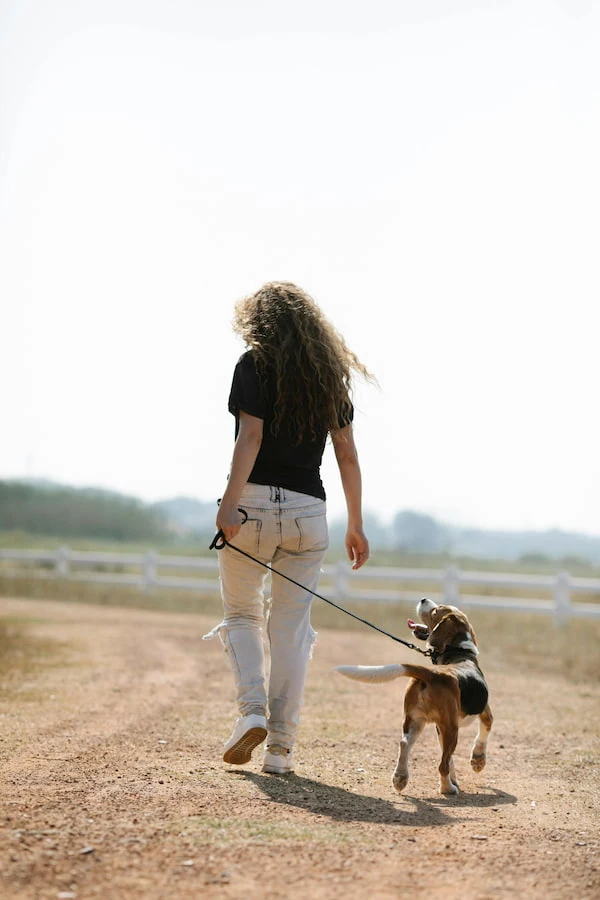
Differences Between Short Walks and Full Walks for Your Dog: Professional Guide
Learn when a short walk is sufficient, when a full walk is needed, and how to plan walks that keep your dog healthy, balanced, and happy.
Not all walks serve the same purpose for your dog. While a short walk may meet basic needs, a full walk provides physical, mental, and emotional benefits. Understanding these differences is essential to plan a balanced and healthy routine for your pet.
What is a short walk and when is it recommended?
A short walk typically lasts 5 to 15 minutes and serves specific purposes:
- Allow the dog to relieve itself.
- Provide minimal energy release to maintain calm temporarily.
- Serve as a transition between indoor activities.
Recommended for puppies who cannot walk long distances, senior dogs with limited mobility, bad weather situations, or quick outings. While useful, it does not replace the need for longer exercise and mental stimulation.
- Allow the dog to relieve itself.
- Provide minimal energy release to maintain calm temporarily.
- Serve as a transition between indoor activities.
Recommended for puppies who cannot walk long distances, senior dogs with limited mobility, bad weather situations, or quick outings. While useful, it does not replace the need for longer exercise and mental stimulation.
What is a full walk and its benefits?
A full walk lasts longer, usually 30 minutes to 2 hours, and includes:
- Sufficient physical exercise to maintain weight and muscle condition.
- Mental stimulation through scent exploration, games, and training.
- Opportunities for socialization with other dogs and people.
- Reinforcement of obedience and behavior control.
Full walks significantly contribute to cardiovascular health, emotional stability, anxiety reduction, and prevention of destructive behaviors.
- Sufficient physical exercise to maintain weight and muscle condition.
- Mental stimulation through scent exploration, games, and training.
- Opportunities for socialization with other dogs and people.
- Reinforcement of obedience and behavior control.
Full walks significantly contribute to cardiovascular health, emotional stability, anxiety reduction, and prevention of destructive behaviors.
Key differences in duration and intensity
The main difference is time and exercise intensity:
- Short walk: low intensity, focused on minimal movement and basic needs.
- Full walk: variable intensity, combining walking, running, play, and exploration.
While a short walk allows the dog to stretch its legs and maintain routine, a full walk requires more physical and mental effort, favoring energy expenditure and comprehensive stimulation.
- Short walk: low intensity, focused on minimal movement and basic needs.
- Full walk: variable intensity, combining walking, running, play, and exploration.
While a short walk allows the dog to stretch its legs and maintain routine, a full walk requires more physical and mental effort, favoring energy expenditure and comprehensive stimulation.
Mental stimulation and exploration
During a short walk, the dog usually follows a predictable routine with little exploration of scents or external stimuli.
On a full walk, the dog experiences:
- Sniffing different environments and objects.
- Exposure to new sounds, textures, and people.
- Improvised games challenging mind and body.
- Route variation to avoid monotony and increase curiosity.
Mental stimulation on full walks reduces boredom and anxiety, improving behavior at home.
On a full walk, the dog experiences:
- Sniffing different environments and objects.
- Exposure to new sounds, textures, and people.
- Improvised games challenging mind and body.
- Route variation to avoid monotony and increase curiosity.
Mental stimulation on full walks reduces boredom and anxiety, improving behavior at home.
Socialization and interaction with other dogs
In short walks, social interaction is minimal or non-existent due to the brevity of the outing.
In full walks, the dog can:
- Meet and greet other dogs and people in a controlled manner.
- Learn social rules like not jumping or barking excessively.
- Gradually adapt to new situations and environments.
This contact is crucial to prevent fear, aggression, or social stress, especially in puppies and young dogs.
In full walks, the dog can:
- Meet and greet other dogs and people in a controlled manner.
- Learn social rules like not jumping or barking excessively.
- Gradually adapt to new situations and environments.
This contact is crucial to prevent fear, aggression, or social stress, especially in puppies and young dogs.
Reinforcing obedience and training
A short walk allows limited practice of basic commands: “heel,” “come,” “sit.”
A full walk can integrate more complex exercises:
- Combining commands during the walk.
- Interactive obedience games.
- Exercises for concentration and impulse control.
This improves discipline, self-control, and communication between owner and dog, strengthening bonds and safety during walks.
A full walk can integrate more complex exercises:
- Combining commands during the walk.
- Interactive obedience games.
- Exercises for concentration and impulse control.
This improves discipline, self-control, and communication between owner and dog, strengthening bonds and safety during walks.
Physical health benefits
Short walks provide minimal movement but are insufficient to maintain optimal fitness.
Full walks provide:
- Muscle and joint strengthening.
- Improved cardiovascular and respiratory endurance.
- Weight control and obesity prevention.
- Increased energy and daily disposition.
Full walks are essential for healthy development and disease prevention.
Full walks provide:
- Muscle and joint strengthening.
- Improved cardiovascular and respiratory endurance.
- Weight control and obesity prevention.
- Increased energy and daily disposition.
Full walks are essential for healthy development and disease prevention.
Common mistakes when differentiating walks
Frequent mistakes that reduce effectiveness include:
- Assuming a short walk replaces a full walk.
- Underestimating the need for mental and social stimulation on brief walks.
- Always maintaining the same route and routine, causing boredom.
- Ignoring signs of fatigue or stress during long walks.
Avoiding these mistakes ensures each type of walk fulfills its purpose correctly.
- Assuming a short walk replaces a full walk.
- Underestimating the need for mental and social stimulation on brief walks.
- Always maintaining the same route and routine, causing boredom.
- Ignoring signs of fatigue or stress during long walks.
Avoiding these mistakes ensures each type of walk fulfills its purpose correctly.
How to combine short and full walks
Ideal planning combines both types of walks according to dog needs and owner availability:
- Short walks for quick routines, bathroom breaks, or transitions.
- Full walks for comprehensive exercise, exploration, and socialization.
- Alternate days or times according to age, energy, and weather.
- Observe body language to adjust intensity and duration.
A balanced combination ensures active, happy, balanced, and healthy dogs.
- Short walks for quick routines, bathroom breaks, or transitions.
- Full walks for comprehensive exercise, exploration, and socialization.
- Alternate days or times according to age, energy, and weather.
- Observe body language to adjust intensity and duration.
A balanced combination ensures active, happy, balanced, and healthy dogs.
Final recommendations
To optimize your dog’s routine:
- Clearly understand the differences between short and full walks.
- Adapt each walk to age, breed, size, and energy level.
- Integrate physical exercise, mental stimulation, and socialization.
- Maintain consistency and vary routes, games, and stimuli.
- Monitor signs of stress, fatigue, or excitement to adjust walks.
Following these guidelines, walks become effective tools for the dog’s overall well-being, ensuring health, emotional balance, and proper behavior.
- Clearly understand the differences between short and full walks.
- Adapt each walk to age, breed, size, and energy level.
- Integrate physical exercise, mental stimulation, and socialization.
- Maintain consistency and vary routes, games, and stimuli.
- Monitor signs of stress, fatigue, or excitement to adjust walks.
Following these guidelines, walks become effective tools for the dog’s overall well-being, ensuring health, emotional balance, and proper behavior.