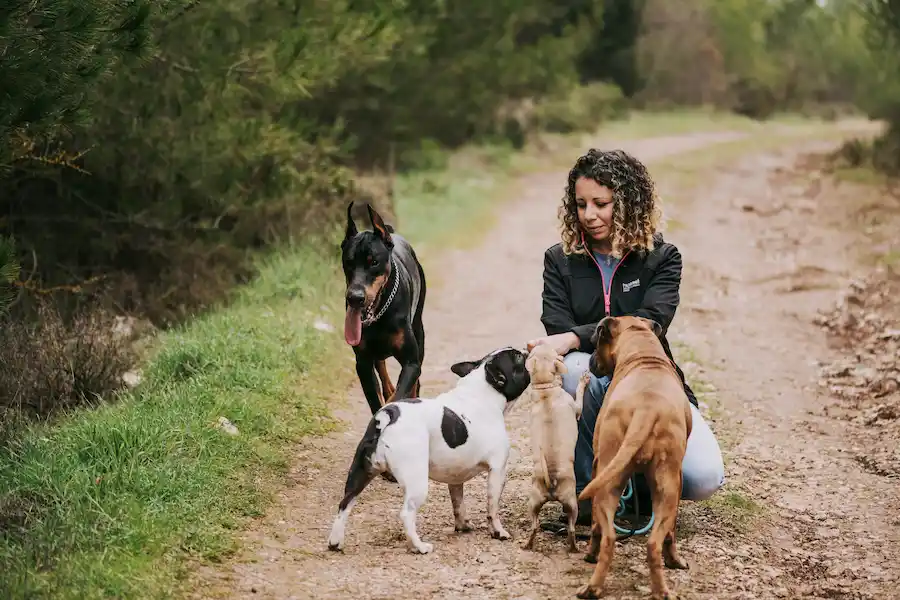
Basic dog commands: which to teach first and how to train them
The 7 basic commands every dog should know, the best order to teach them, how to train each one with positive reinforcement, and an 8-week plan.
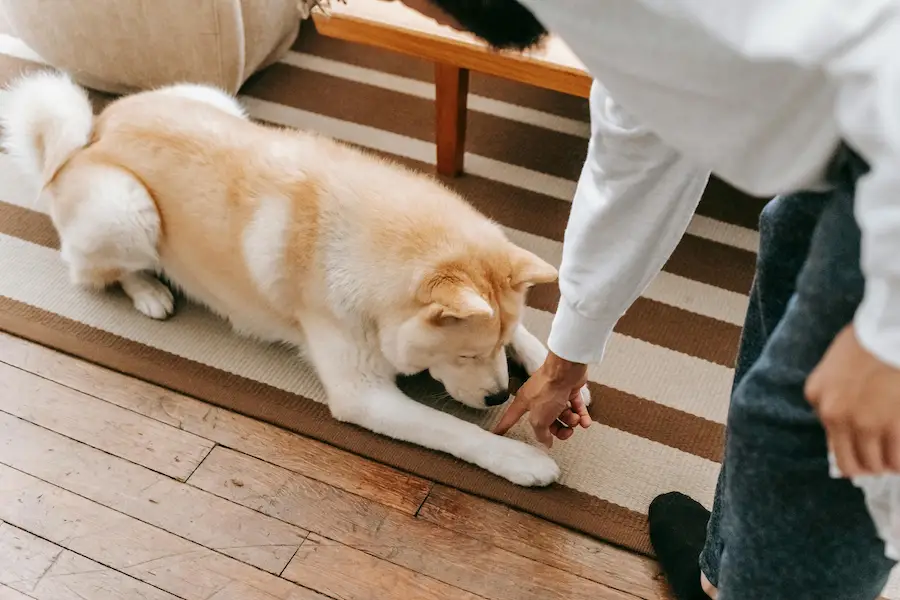
Quick answer
The seven basic dog commands are: name attention, sit, down, stay, come, leave it/drop it, and loose-leash walking. Teach them in that order with positive reinforcement, in 5–10 minute sessions, 1–3 times a day. Many dogs have the basics down at home within 6–8 weeks; reliability around distractions takes several months.
In this article
A dog who looks at you when you say their name, sits before crossing the street, waits at the door, and comes back when called isn’t a “submissive” dog. They’re a dog who understands what you’re asking and stays safer because of it. Basic dog commands are that shared language, and you can teach them at home, at any age, without punishment.
This guide covers the seven must-know cues, the best order to teach them, how to train each one (with links to our detailed guides), an 8-week plan, and the mistakes that slow dogs down the most.
What basic commands should every dog know?
| Command | What it’s for | When to start | Difficulty |
|---|---|---|---|
| 1. Name | Getting attention before any other cue | The day your dog comes home | Easy |
| 2. Sit | Self-control: greeting without jumping, waiting for food | The day your dog comes home | Easy |
| 3. Down | Settling at a café patio, with guests, or at the vet | Once sit is solid | Medium |
| 4. Stay | Safety at doors, in the car, and at crosswalks | Once sit and down are solid | Medium-hard |
| 5. Come | Safety and freedom outdoors | Indoors, from day one | Hard outside |
| 6. Leave it and drop it | Stopping your dog from grabbing or swallowing something dangerous | Early on, as a trading game | Medium |
| 7. Loose-leash walking | Pleasant, safe walks | From the very first walks | Hard |
The order isn’t random: the first cues are the easiest and lay the groundwork for the rest. Stay, for example, is built on a solid sit or down, and recall gets much better once your dog reliably responds to their name.
For reference, the American Kennel Club’s Canine Good Citizen (CGC) test, a widely recognized good-manners certificate, checks exactly these skills: sit and down on cue, staying in place, coming when called, and walking on a loose leash.
Before you start: how dogs learn
- Positive reinforcement. Dogs repeat what works for them. Reward what you want instead of punishing what you don’t; our guide to positive reinforcement dog training explains the science behind it.
- Mark the exact moment. Say “yes!” (or use a clicker) the instant your dog gets it right and deliver the treat within 1–2 seconds.
- Keep sessions short. 5–10 minutes for adults and 2–5 for puppies, 1 to 3 times a day. Always end on a win.
- One word and one hand signal per cue. The same for everyone in the house. “Down” can’t mean “lie down” to one person and “get off the couch” to another (use “off” for that).
- Small, varied treats. Pea-sized or smaller. Treats should stay under 10% of daily calories, so on heavy training days, take that amount out of your dog’s regular kibble.
- Level up with a rule. Raise the difficulty when your dog gets it right 8 out of 10 times; if they miss twice in a row, go back a step.
The 7 basic dog commands, one by one
1. Name: the foundation of attention
Say your dog’s name once in a happy voice. The moment they look at you, mark and reward. Do 10 reps several times a day, then practice when they’re a little distracted. Never use their name to scold: it should mean “look at me, something good is coming.” The full method is in how to teach a dog its name.
2. Sit
Hold a treat at your dog’s nose and slowly move it up and back; as they follow it, their rear end drops. Mark and reward that instant. After 5–6 reps, use the same motion with an empty hand, and once they respond well, say the word right before the hand signal. We break it down phase by phase in how to teach your dog to sit.
3. Down
From a sit, lower the treat straight down to the floor between your dog’s front paws, then slowly slide it forward, tracing an “L.” Mark when their chest and elbows touch the floor. Some dogs need several sessions, so practice on a soft surface. More tips in our guide on how to teach a dog to lie down.
4. Stay and the release word
With your dog in a sit or down, say “stay,” wait 2 seconds, then mark and reward while they’re still in position. Then give your release word (“free!” or “okay”) to tell them they can get up. Build duration, distance, and distractions one at a time, and at first walk back to your dog to reward instead of calling them out of the stay. Step by step in how to teach a dog to stay.
5. Come
Pick a cheerful word you’ve never used for anything unpleasant, charge it by giving a treat every time you say it, and start by calling your dog from 3–6 feet (1–2 m) away indoors. Outside, use a 15–30 foot (5–10 m) long line until your dog comes 8 out of 10 times around distractions. It’s the most important cue for safety, and we cover it in depth in how to teach your dog to come when called.
6. Leave it and drop it
These are two different cues. “Leave it” means “don’t touch”: show a treat in a closed fist, and when your dog stops trying and backs off, reward from your other hand. “Drop it” means “let go of what’s in your mouth”: trade it for something better. Never chase your dog or pry things out of their mouth, because that encourages guarding. Full guide: teach your dog leave it and drop it.
If your dog has already swallowed something dangerous, don’t try to pull it out or make them vomit: call your vet or an animal poison control hotline right away.
7. Loose-leash walking
The rule is simple: tight leash, you stop; loose leash, you go. Reward often when your dog walks next to your leg, and use a Y-shaped harness with a fixed leash of about 6 feet. You’ll find specific exercises and timelines in how to teach your dog to walk without pulling on the leash.
An 8-week plan for teaching basic commands
| Weeks | New cues | Goal by the end of the block |
|---|---|---|
| 1–2 | Name, sit, trading game | Responds to name and “sit” at home with no lure |
| 3–4 | Down, indoor recall | Lies down on a hand signal and comes from another room |
| 5–6 | Stay, leave it | Stays 10–15 seconds at 3–6 ft (1–2 m); ignores a treat on the floor |
| 7–8 | Loose-leash walking, long-line recall outdoors | Practices every cue in 3 different places |
In each session, pair one new cue with two or three your dog already knows, so you review without boring them. Use the cues outside of sessions too: “sit” before meals, “stay” before you open the door, “leave it” when you pass a wrapper on the sidewalk.
These timelines are estimates. An attentive puppy may move faster; a fearful rescue or a bouncy adolescent may need longer. What matters is not skipping steps.
How to get your dog to listen anywhere
A perfect sit in the living room doesn’t mean your dog can do it at the park. Dogs are poor generalizers: every new place is almost a new exercise. To build reliable cues:
- Change locations gradually: living room, kitchen, backyard, a quiet street, a friend’s house, the park.
- Raise one difficulty at a time: duration, distance, or distractions. When you raise one, lower the others.
- Upgrade rewards away from home: outdoors, a piece of kibble is competing with smells and other dogs.
- Fade treats gradually: reward every success at first, then 3 out of 4, then at random, replacing some food with real-life rewards (going outside, play, sniffing). Never stop rewarding completely.
- Brace for adolescence: between roughly 6 and 18 months, it’s normal for your dog to seem to forget everything. Go back to easier levels and stay consistent.
Classes, a trainer, or DIY at home?
Most basic commands can be taught at home with this guide. Still, each option has its place:
- Puppy classes: combine basic manners with supervised socialization. They’re highly recommended between 8 and 16 weeks, following your vet’s advice on vaccinations.
- Group classes for adult dogs: help you practice around real distractions (other dogs and people).
- Private trainer: useful if you’re stuck, if there are behavior problems, or if your dog gets overwhelmed in a group.
To choose, ask what methods they use, ask to watch a class, and look for small groups. Credentials such as the CPDT-KA show a trainer has passed an independent exam. Rule out anyone who uses leash pops or choke, prong, or shock collars.
Mistakes that slow down training
- Repeating the cue. Your dog learns the first one doesn’t count. Say it once, and if they don’t respond, help with a hand signal or make it easier.
- Showing the treat before the behavior. If the reward is always visible, your dog will only listen when they see it.
- Taking it outside too soon. Your dog should respond well at home first.
- Using recall to scold or always to end the fun.
- Training a dog who’s exhausted, starving, or overexcited. Pick moments when they can focus.
- Punishing mistakes. A mistake means the task was too hard, not that your dog is defying you.
Frequently asked questions
At what age can you start teaching basic commands?
As soon as your puppy comes home, usually around 8 weeks. At that age, they pick up their name, sit, and recall games quickly, as long as sessions last 2–5 minutes and treats are tiny. Stay and loose-leash walking need more self-control and tend to come together better from about 3–4 months. There’s no need to wait until your dog is “older” to start.
Can an adult or senior dog learn basic commands?
Yes. Dogs learn throughout their lives, and many adult rescues focus better than puppies do. If your dog has had bad experiences, start with very easy cues to build their confidence. For seniors, adapt positions to their mobility: if their joints hurt, lean on a standing stay and check with your vet if you notice stiffness or pain.
Is it better to use verbal cues or hand signals?
Both, but teach the hand signal first. Dogs pay far more attention to body language than to words, so they learn hand signals faster. Once your dog responds well to the signal, add the word right before it. Having both versions is really useful: hand signals work in noisy places or at a distance, and they’ll come in handy if your dog loses some hearing as they age.
Does it matter what language I use for commands?
Not at all: to your dog, words are sounds linked to a behavior, not a language. What matters is that everyone in the family uses exactly the same words, that they’re short, and that they sound different from each other. Some people pick words in another language precisely so they don’t get mixed up with everyday conversation.
Do I need a clicker to teach commands?
It’s not essential. A short marker word like “yes!” does the same job. A clicker has the advantage of always sounding the same and being very precise, which makes it easier to mark fast movements or teach complex tricks. If juggling a leash, treats, and a clicker feels awkward, start with a marker word and try the clicker later.
Sources
- American Kennel Club (AKC): Canine Good Citizen program and basic command training guides.
- American Veterinary Society of Animal Behavior (AVSAB): position statements on humane dog training and puppy socialization.
- Certification Council for Professional Dog Trainers (CCPDT): information on the CPDT-KA certification.
- ASPCA: guidance on positive reinforcement training.