How to teach a dog to lie down: lure, capture, and shape
Teach your dog to lie down with positive reinforcement: three methods (luring, capturing, and shaping), how to add the cue, and what to do if they won’t.
Quick answer
To teach a dog to lie down, start from a sit, lower a treat from their nose straight to the floor between their front paws, then slowly slide it forward. Mark the moment their chest and elbows touch the floor and reward down low. If they get stuck, capture spontaneous downs or shape the behavior in small steps.
In this article
- Why lying down is harder for many dogs
- Which method to choose: luring, capturing, or shaping
- What you need before you start
- Method 1: luring, step by step
- Method 2: capturing the down
- Method 3: shaping the down in small steps
- How to add the verbal cue and hand signal
- From down to calm: settling on a mat
- Common mistakes when teaching down
- What to do if your dog won’t lie down
- Frequently asked questions
“Down” is the calm-dog position: the one you want on a restaurant patio, during dinner, or in the vet’s waiting room. Yet plenty of dogs find it much harder than sit, and some owners spend weeks holding a treat on the floor while their dog hovers, elbows locked. Knowing how to teach a dog to lie down with the method that suits your particular dog makes all the difference.
This guide covers three positive reinforcement methods (luring, capturing, and shaping), how to pick the right one, how to move from the treat to a verbal cue, and what to do if your dog just won’t lie down.
Why lying down is harder for many dogs
Lying down isn’t just another position. For a dog, it comes with baggage that sitting doesn’t:
- It’s a vulnerable position. It takes longer to get up and move away. Anxious dogs, new rescues, or any dog in an unfamiliar place may resist, even if they do it happily in your living room.
- The surface matters. Cold tile, wet grass, or hot pavement makes anyone think twice. Sighthounds and short-coated, lean dogs usually prefer something soft.
- Excitement gets in the way. A dog who just woke up ready to play has a hard time shifting into low gear.
- The lure often goes wrong. If the treat drops too fast or drifts away, your dog stands up to follow it.
It’s the third of the basic dog commands, and it’s best to start once your dog’s sit is solid.
Which method to choose: luring, capturing, or shaping
All three methods are built on positive reinforcement dog training: your dog does something, you mark it, and the reward follows. What changes is how you get that first down.
| Method | How it works | Best for | Downside |
|---|---|---|---|
| Luring | You guide your dog into position with a treat | Most dogs; often works in 1–3 sessions | You need to fade the treat from your hand early |
| Capturing | You reward your dog when they lie down on their own | Dogs who get frantic around food or are wary of hands | Slower at first |
| Shaping | You reward small steps that get closer and closer to a down | Dogs who get stuck halfway with a lure | Requires good timing; easiest with a clicker |
You can mix them: lure until your dog’s head goes down and shape the rest, or capture spontaneous downs throughout the day while you practice luring in your sessions.
What you need before you start
- A soft surface: a rug, a mat, or a towel. Over time, that mat can become your dog’s “place.”
- Small, high-value treats, tastier than what you use for sit: plain cooked chicken, small bits of cheese, or soft store-bought training treats.
- A reliable sit, since luring usually starts there. If it’s still shaky, review how to teach your dog to sit.
- Good timing: a slightly tired dog, right after a walk, lies down much more easily than one who’s bouncing off the walls.
Keep sessions to 3–5 minutes, once or twice a day, and always end on a success.
Method 1: luring, step by step
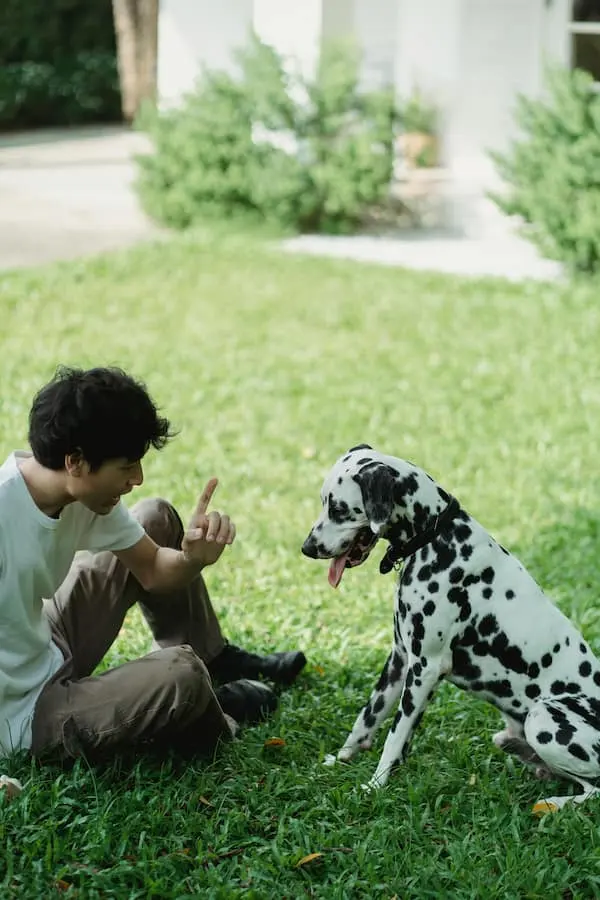
- With your dog sitting, hold a treat right against their nose.
- Slowly lower your hand straight down to the floor, right between their front paws. Their nose should follow your hand the whole way.
- Once their head is down, slide your hand forward very slowly, just a couple of inches, as if you were drawing an “L.”
- The instant their chest and elbows touch the floor, mark (“yes!”) and deliver the treat right there on the floor, between their paws.
- Give one or two more treats while they stay down, then release with “free!” Repeat 5 times and take a break.
If your dog stands up instead of lying down
Usually your hand is moving too fast or too far. Slow down and keep the treat just a couple of inches from their paws. With small or short-legged dogs, moving the treat slightly back toward their chest sometimes works better than moving it forward. If they go halfway down and freeze, reward that half-down a few times: you’ve just started shaping.
The tunnel trick
Sit on the floor with one knee bent to make a tunnel, or use a low chair or coffee table. Lure the treat underneath and out the other side: to follow it, your dog has to duck, and they nearly always end up lying down. Mark and reward as soon as their elbows touch the floor. Over a few sessions, raise the tunnel until they don’t need it anymore.
Fade the treat from your hand
After 5–6 successes in a row, make the exact same motion with an empty hand. When your dog lies down, mark and pull a treat from your other hand or your treat pouch. Over the next few days, shrink the motion to a short downward sweep of your palm.
Method 2: capturing the down
Capturing means waiting for your dog to offer the behavior on their own, then rewarding it. It works great for dogs who jump or mouth your hand when they see food.
- Pick a time when your dog is tired, in a small room with no distractions, and keep treats handy.
- Calmly ignore them (read, scroll your phone) until they lie down.
- The second they do, mark and place a treat between their paws.
- Toss another treat about 3 feet (1 m) away so they get up, then wait again.
The first few reps can take several minutes. After a few sessions, you’ll see your dog flop down in front of you on purpose, “offering” the behavior: that’s when you add the cue. A handy add-on is keeping a treat jar in the living room and rewarding your dog whenever they lie down calmly during the day. Besides the down, you’re reinforcing relaxation.
Method 3: shaping the down in small steps
If your dog gets stuck halfway, break the down into small pieces and reward each one until it’s easy. This is where clicker training really shines, because you can mark quick, tiny movements precisely.
- Lowers their head following your hand toward the floor.
- Touches the floor with their nose.
- Bends their elbows and drops their shoulders.
- Rests one elbow on the floor.
- Rests their chest and both elbows: a full down.
- Holds the down for 2–3 seconds.
Move to the next step when your dog gets the current one 4 out of 5 times; if they miss two or three in a row, go back a step. Shaping is mentally tiring, so keep sessions to 2–3 minutes.
How to add the verbal cue and hand signal
Once your dog responds to the empty-hand motion 8 out of 10 times, say “down” once, pause a second, then give the hand signal. If you say the word while your hand is moving, your dog will focus only on the gesture. After a few sessions, they’ll start lying down when they hear the word: that rep deserves a jackpot.
Pick your word carefully. “Down” is the classic, but only if nobody in the house also uses it to mean “get off the couch” or “stop jumping” (use “off” for those). From there, generalize gradually: ask in other rooms, from a step away, in the yard, and on walks. Dogs need practice in several places before they respond everywhere; our guide on how long it takes to train a dog has realistic timelines for each stage.
From down to calm: settling on a mat
Once your dog lies down on cue, you can turn it into a long, relaxed down that’s incredibly useful away from home. Pair it with a stay: you’ll find the full progression in how to teach a dog to stay.
- Use the same mat every time and bring it to patios, the vet, or friends’ homes.
- Place treats between their paws calmly and quietly, without hyping them up.
- Reward signs of relaxation: hip rolled to one side, head resting on the floor or their paws, slow breathing.
- Start with 30 seconds and build up to several minutes, spacing out the treats.
Common mistakes when teaching down
- Pushing on their shoulders or pulling their front legs out. It’s uncomfortable, can make your dog wary of your hands, and doesn’t teach them to do it on their own.
- Moving the lure too fast or too far. It’s the number one reason dogs stand up.
- Rewarding up high, which forces your dog to get up to take the treat.
- Repeating the cue. “Down, down, DOWN!” teaches your dog that the third one is the real one.
- Training on a cold or slippery floor, especially with short-coated dogs.
- Asking for it outside too soon. Lying down on wet grass or near other dogs is an advanced skill, so bring their mat.
- Sessions that drag on. More than 5 minutes of back-to-back downs bores almost any dog.
What to do if your dog won’t lie down
If your dog lies down at home but not at the park, think about the setting before you think about obedience. A dog who won’t lie down somewhere new may be uneasy: watch for panting when it isn’t hot, lip licking, scanning in every direction, or a tucked tail. If you see that, don’t push it. Practice a sit or simple eye contact there first and try again once they’re more relaxed.
If the issue is the surface, always bring their mat. And if your dog never quite makes it all the way down, combine luring and shaping and reward every small bit of progress.
Frequently asked questions
Should I use “down,” “lie down,” or something else?
Whatever you like, as long as the whole family uses the same word for this and nothing else. The catch with “down” is that many people also say it when the dog jumps up or climbs on the couch, which gives two behaviors the same sound. If that happens in your house, pick “lie down” or “settle.” Teach the hand signal too: it helps at a distance or if your dog loses hearing with age.
At what age can a puppy learn to lie down?
As soon as they come home, usually around 8 weeks old. Puppies lie down many times a day out of sheer exhaustion, so capturing works especially well with them. Keep sessions to 1–2 minutes with tiny treats and don’t expect them to hold the position: at that age, you just want them to link lying down with good things.
How do I teach my dog to lie down from a stand, without sitting first?
With your dog standing, slowly lower the treat from their nose to the floor right in front of their front paws, then bring it slightly back toward their chest. Many dogs “fold” backward into a down without passing through a sit. It’s harder than a down from a sit, so wait until they’ve mastered the easy version and start with high-value treats.
My dog lies down but pops right back up. What should I do?
Most likely the treat comes too late or too high, or the release isn’t clear. Give two or three treats in a row between their paws while they’re still down, and release them with your word before they decide to get up. Then stretch the wait gradually: 2 seconds, 4, 3, 6. Within a few sessions, they’ll learn that staying down is what pays.
Can you teach a senior dog to lie down?
Yes, as long as it doesn’t hurt. Older dogs learn well, sometimes just a bit more slowly. Use a cushioned surface, keep the reps per session low, and watch how they lie down and get up. If you notice stiffness or effort, talk to your vet, and in the meantime practice a stand-stay, which puts no strain on their joints.
Sources
- American Kennel Club (AKC): down training guides and Canine Good Citizen test requirements.
- American Veterinary Society of Animal Behavior (AVSAB): position statement on humane dog training methods.
- ASPCA: guidance on positive reinforcement training.
- RSPCA: advice on reward-based dog training.