
Dog body language: a practical guide to understanding your dog
Learn to read dog body language: what your dog’s ears, eyes, mouth, tail and posture are telling you, with a signal chart and the most common myths.
Quick answer
To read dog body language, look at the whole dog and the context, never a single signal. A relaxed dog has a loose body, a slightly open mouth and soft eyes; a tense dog goes stiff, closes their mouth and stares. A wagging tail doesn’t always mean happiness: watch how high it’s held and how it moves.
In this article
- How to read a dog: 3 rules before you interpret anything
- Dog body language chart: body part, signal and meaning
- What a relaxed, happy dog looks like
- Signs of stress and fear
- Warning and threat signals: when to give space
- The tail: why a wagging tail doesn’t always mean happy
- Dog-to-dog body language: play or fight?
- How to interact with a dog based on their body language
- Frequently asked questions
Your dog is talking to you all day long, just not with words. The position of their ears, the tension in their mouth, the way they wag and where they put their weight tell you whether they’re relaxed, worried about something or asking to be left alone. Learning dog body language is the most useful skill you can have as an owner: it prevents misunderstandings, helps prevent bites and makes life together a lot easier.
In this guide you’ll find the ground rules for reading a dog, a chart of signals by body part and what they mean, how to recognize a relaxed, worried or threatening dog, how to tell play from a real fight, and the most widespread myths.
How to read a dog: 3 rules before you interpret anything
- Look at the whole dog. A wagging tail with a stiff body and closed mouth means something very different from a wagging tail with a loose body and an open mouth. Scan from nose to tail.
- Consider the context. What just happened? Who’s approaching? A yawn after a nap is sleepiness; a yawn during a hug is probably discomfort.
- Watch for changes. Signals shift in seconds. What matters is the sequence: a dog who goes from wiggly to frozen is telling you something, even without a growl.
Keep each breed’s anatomy in mind, too. A greyhound naturally carries a low tail; a husky curls theirs over the back. A beagle’s floppy ears move less than a German shepherd’s, long coats can hide the eyes or raised hackles, and flat-faced breeds like French bulldogs make mouth tension harder to see. That’s why it pays to know what your own dog looks like when they’re calm.
Dog body language chart: body part, signal and meaning
| Body part | Signal | What it usually means |
|---|---|---|
| Ears | Natural position, no tension | Calm |
| Ears | Upright and pointed forward | Attention or interest; with a stiff body, alertness or threat |
| Ears | Pinned back flat against the head | Fear, worry or an attempt to appease |
| Ears | Slightly back, with squinty eyes and a loose body | Friendly greeting |
| Eyes | Soft gaze, relaxed lids, almond shape | Relaxed |
| Eyes | Hard, fixed stare without blinking | Intense alertness or a warning |
| Eyes | Whale eye: whites of the eyes showing | Discomfort or stress; may come before a warning |
| Eyes | Looking away or turning the head | Avoiding conflict, polite dog manners |
| Mouth | Slightly open, loose tongue, relaxed corners | Calm dog |
| Mouth | Closed and tight, corners pulled back | Stress or alertness |
| Mouth | Lips pulled up, teeth showing, wrinkled muzzle | Threat: “back off” |
| Mouth | Lips stretched horizontally, low body and wiggling | Appeasement “grin,” not a threat |
| Mouth | Lip licking or yawning out of context | Calming signal or mild stress |
| Tail | Mid-height, wide wag that moves the hips | Friendly and relaxed |
| Tail | High and stiff, short and fast wag | High arousal or tension |
| Tail | Low or tucked between the legs | Fear or insecurity |
| Body | Loose and curvy, weight evenly spread | Relaxed |
| Body | Stiff, weight shifted forward | Alert, possible threat |
| Body | Crouched, weight shifted back | Fear, wanting to get away |
| Body | Play bow: chest down, rear up | Invitation to play |
| Body | Belly up with a loose, wiggly body | Relaxed, asking for contact |
| Body | Belly up, stiff, tail tucked | Appeasement: wants you to stop |
| Hair | Raised along the shoulders or back (hackles) | High arousal (fear, alertness or excitement), not always aggression |
| Paws | One front paw lifted while the body is still | Uncertainty, anticipation or tension |
What a relaxed, happy dog looks like
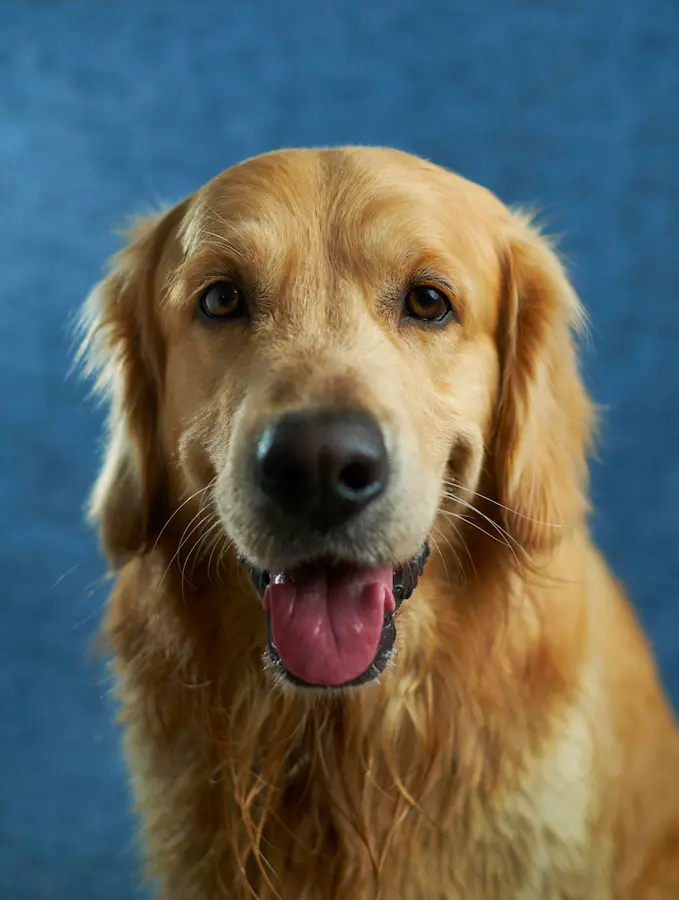
A calm dog has a soft, curvy body, weight spread over all four paws, a slightly open mouth with a loose tongue and soft eyes. The tail sits at its natural height and, if it wags, it does so in wide sweeps, sometimes in circles, taking the hips along. They approach in a curve rather than a straight line and respond to your voice without startling.
At rest, they lie on their side or belly up, legs loose and breathing slow. If you want to assess your dog’s well-being beyond a single moment, how to know if your dog is happy covers everyday indicators: appetite, play, sleep and curiosity.
Signs of stress and fear
Stress usually starts small: yawning, lip licking, turning the head, shaking off as if wet, suddenly sniffing the ground. If the situation continues, ears go back, the tail drops, the body lowers and panting starts without heat. Intense fear shows up as trembling, trying to hide or escape, freezing or a tail tucked tight between the legs.
When you see these signals, the answer is almost always the same: give distance and don’t force anything. You’ll find the full list, along with what each signal can mean in other contexts, in our guide to signs of stress in dogs.
Warning and threat signals: when to give space
A dog about to defend themselves usually freezes. The mouth closes, the stare hardens, the weight shifts forward and the tail often stops wagging or flicks stiffly up high. A growl, a lip lift and bared teeth may follow. All of these mean the same thing: “stop and back away.”
The tail: why a wagging tail doesn’t always mean happy
A wagging tail signals emotional arousal, not necessarily happiness. What matters is the height, the stiffness and the type of movement. A low tail wagging fast can signal insecurity; a high, stiff tail that vibrates can mean tension or intense excitement; a mid-height tail sweeping side to side with the whole rear end is genuine joy. Researchers have even looked at subtle differences depending on which side the tail wags toward. We explain it all in why dogs wag their tails.
Dog-to-dog body language: play or fight?
Healthy play between dogs can be noisy and look rough, but it has very recognizable signals:
- Play bows at the start and throughout.
- Exaggerated, inefficient movements: bouncing, sideways hops, lots of head swinging.
- Role reversals: one chases, then gets chased; one is on the bottom, then on top.
- Self-handicapping: the bigger dog lies down or mouths gently to even things out with a smaller one.
- Short pauses where both dogs shake off, sniff or step away for a moment.
Step in calmly if one dog always chases while the other always runs, if one tries to hide or has a tucked tail, if bodies stiffen and play gets quieter, or if one pins the other with no role reversal. A simple check: separate them for a few seconds. If the dog who seemed to be “losing” goes right back for more, they were playing; if they use the break to walk away, they’d had enough. Before your next outing, review our dog park etiquette tips.
How to interact with a dog based on their body language
- Let the dog come to you. Don’t lean over them or stare. Turn slightly sideways and let them sniff.
- Pet the chest or side before the head, and skip the hugs: many dogs tolerate them, but few enjoy them.
- Respect rest and mealtimes. A dog who is sleeping or eating shouldn’t be bothered.
- Teach kids to “be a tree”: stand still, arms folded in, looking at their feet if a dog is overwhelming them. If a baby is on the way, start preparing early with our guide on preparing your dog for a baby.
Frequently asked questions
Do dogs understand our body language?
To a large extent, yes. Research has shown that dogs follow human gestures like pointing and can tell some human facial expressions apart. They also read our posture: leaning over them, staring or approaching head-on and fast feels intimidating to many dogs, even when our intentions are affectionate.
Does my dog look guilty because they know they did something wrong?
What we call guilt is a cluster of appeasement signals: ears back, averted eyes, a lowered body, a tucked tail. A 2009 study by Alexandra Horowitz found that this look depended more on whether the owner scolded the dog than on whether the dog had actually disobeyed. In other words, your dog is responding to your frustration, not to a moral sense of having done wrong.
When my dog rolls over, do they want a belly rub?
Sometimes, and sometimes the exact opposite. If the body is loose, the mouth relaxed and they’re wiggling, it’s usually an invitation for contact. If they’re stiff, with a tucked tail, lip licking or showing the whites of their eyes, it’s an appeasement signal that means “please stop.” When in doubt, use the consent test.
What does it mean when my dog stares at me?
It depends on the stare. A soft gaze with relaxed lids and a calm face is a sign of connection and often a request for attention, food or a walk. A hard, unblinking stare with a frozen body is a warning. With dogs you don’t know, avoid holding eye contact for long.
Do dogs with docked tails or floppy ears communicate less clearly?
They lose some of their tools. A dog with no tail or very droopy ears sends less information through those body parts, and other dogs may misread them. With these dogs, pay closer attention to the mouth, the eyes, body tension and weight distribution, which are just as expressive.
Sources
- American College of Veterinary Behaviorists (ACVB): Decoding Your Dog.
- ASPCA: guidance on canine body language.
- Dogs Trust: resources on reading dog body language.
- Rugaas, T. On Talking Terms with Dogs: Calming Signals. Dogwise Publishing.
- Horowitz, A. (2009). Disambiguating the “guilty look”: Salient prompts to a familiar dog behaviour. Behavioural Processes.