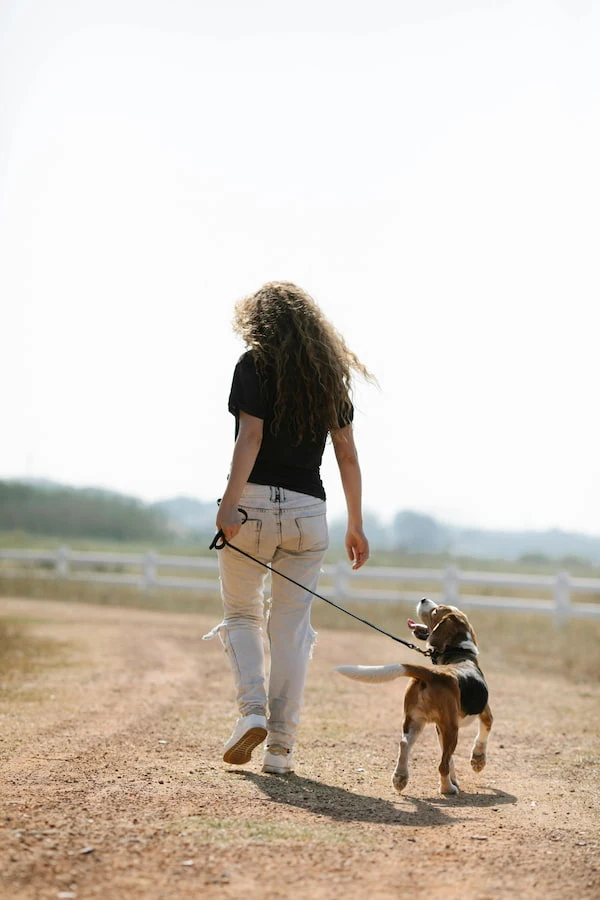
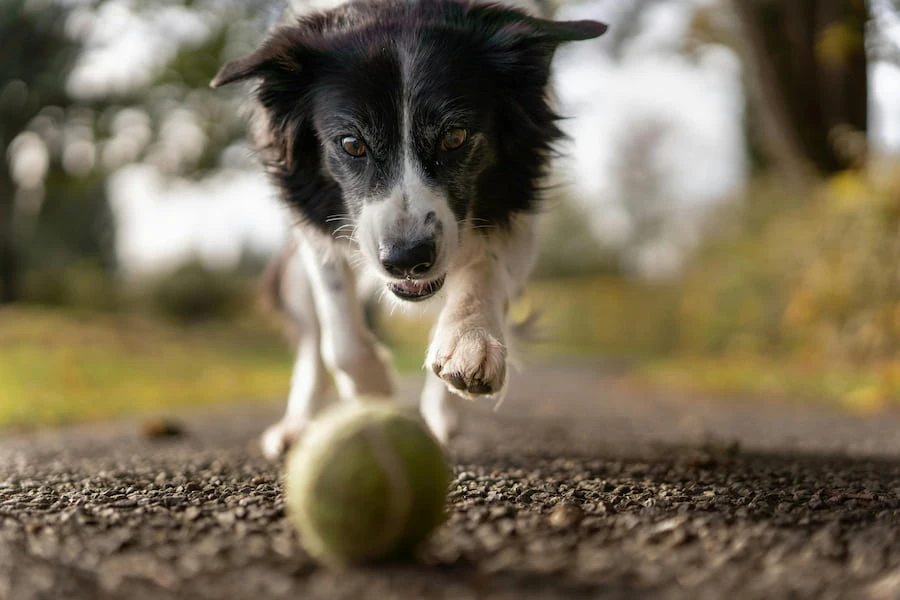
How often should you walk your dog, and for how long?
How many walks and minutes a day your dog needs by age and energy level, how much exercise is enough, and the signs your dog needs more or less.
Quick answer
A healthy adult dog should go out at least 3 times a day, ideally 3–4, adding up to anywhere from 30 minutes to more than 2 hours of activity depending on age, breed, and energy. Puppies need shorter, more frequent outings, and senior dogs need gentle, spread-out walks. No dog should wait more than 6–8 hours for a potty break.
In this article
- The short answer: at least 3 outings a day
- Dog walking chart by age and energy level
- How much exercise does a dog need? (It’s not all walking)
- How to adjust walks for puppies and senior dogs
- Other factors that change the math
- Signs your dog needs more (or less) exercise
- Sample schedule if you work outside the home
- Frequently asked questions
Few questions have such a wide range of answers: a 2-year-old border collie and a 10-year-old French bulldog don’t need the same thing. Still, there are clear minimums and useful ranges that tell you whether your dog is getting enough. Knowing how often you should walk your dog, and for how long, heads off a lot of behavior, weight, and health problems.
This guide covers a walk chart by age and energy level, how much exercise a dog needs overall (it’s not all walking), how to adjust for puppies and seniors, signs your dog needs more or less activity, and a sample schedule if you work outside the home.
The short answer: at least 3 outings a day
For a healthy adult dog, the general guideline is:
- At least 3 outings a day, ideally 4: first thing in the morning, midday or early afternoon, early evening, and before bed.
- No more than 6–8 hours without a chance to relieve themselves. Many dogs can hold it longer, but that isn’t good for their welfare or their bladder.
- At least one longer walk a day, 30–60 minutes or more depending on the dog, with time to sniff and move at their own pace. The other outings can be short.
- Total daily activity ranging from about 30 minutes for laid-back dogs to more than 2 hours for working breeds, counting walks, play, and mental exercise.
Not every outing does the same job: quick trips are mainly for potty breaks, while the full walk covers exercise and exploration. For what each one offers and how to combine them, see short walk vs. long walk.
Dog walking chart by age and energy level
| Profile | Examples | Outings per day | Total activity (approx.) |
|---|---|---|---|
| Puppy (2–6 months) | Any breed | 6–10 short potty breaks | Several 10–20 min outings at their pace, plus free play |
| Adolescent (6–18 months) | Any breed | 3–4 | 45–90 min, no forced exercise until growth is complete |
| Low-energy adult | French bulldog, pug, shih tzu, chihuahua | 3 | 30–60 min |
| Moderate-energy adult | Cavalier King Charles spaniel, bichon frise, miniature schnauzer, many medium mixed breeds | 3–4 | 60–90 min |
| High-energy adult | Border collie, Labrador, German shepherd, husky, beagle, sporting breeds | 3–4 | 2 hours or more, including running, play, and scent work |
| Senior dog | Depends on breed and health | 3–5 short outings | 20–60 min total, at an easy pace |
These are rough ranges, in line with guidance from organizations like the UK’s Kennel Club and the PDSA. Energy varies a lot even within a breed, so the best guide is how your dog behaves at home and how their weight trends over time.
Greyhounds and other sighthounds are an interesting exception: they need a chance to sprint flat out in a safe, fenced area, then happily spend most of the day resting. Short bursts of running and a comfy couch suit them better than marathon walks.
How much exercise does a dog need? (It’s not all walking)
Walking on leash at human pace is light exercise for most medium and large dogs. For a high-energy dog, an hour of sidewalk isn’t enough: they also need to trot, run, play, and use their brain. Daily exercise breaks down into three types:
- Physical: walks, off-leash running in safe areas, fetch, swimming. Builds fitness and supports healthy weight and joints.
- Mental: sniffing, searching for hidden food, learning tricks, solving puzzles. It’s far more tiring than it looks and key on rainy days or for dogs who can’t do much physically.
- Social: calm time with compatible people and dogs, as long as your dog enjoys it.
That’s why two dogs who both walk for 60 minutes can come home in very different states: one marched at heel down the same street, the other sniffed, explored, and played. What makes those minutes count is covered in our guide to a quality dog walk, and for extra activity without leaving home, try these indoor games to tire out your dog.
How to adjust walks for puppies and senior dogs
Puppies
Until their vaccine series is complete, puppies shouldn’t walk in areas with heavy dog traffic, but they can be carried around and visit safe places to socialize. After that, aim for short, frequent outings where your puppy sets the pace, with lots of sniffing and free play on soft ground.
You’ll often hear the “5 minutes of walking per month of age, twice a day” rule. It can be a starting point, but it isn’t backed by solid science. Watching your puppy is more useful: if they sit down, lie down, or start lagging, they’ve had enough and it’s time to head home (carry them if needed). Avoid forced, repetitive exercise like jogging beside you or long runs until growth is complete: around 12 months for small and medium breeds, and 12–18 months or longer for large and giant breeds.
Senior dogs
From roughly 7–10 years old, depending on size, many dogs do better with more walks that are shorter. Start each walk with a few minutes at an easy pace to warm up, choose soft surfaces, and avoid long flights of stairs. Stiffness when getting up, lagging behind, or refusing to jump into the car can point to joint pain, so talk to your vet instead of simply cutting back on walks.
Other factors that change the math
- Flat-faced (brachycephalic) breeds like French bulldogs, English bulldogs, pugs, and boxers: they handle exertion and heat poorly. Keep walks relaxed, use a harness, and go out during cooler hours.
- Overweight dogs: they need more activity, but build it up gradually, say 5 extra minutes per week, alongside adjustments to their food.
- Heart, breathing, or joint conditions: your vet should set the type and amount of exercise.
- Heat: in summer, walk early in the morning and late in the evening, and stay off hot pavement.
- Cold: small, short-coated, and senior dogs appreciate a coat and walks that are a little shorter and brisker.
Signs your dog needs more (or less) exercise
Common signs your dog isn’t getting enough activity:
- Chewing things up, digging, or barking out of boredom.
- Can’t settle in the evening and paces around the house.
- Bolts out the door and pulls hard for the first few minutes of a walk.
- Gains weight while eating the same amount.
- Constantly demands attention with toys, barking, or nudging.
Keep in mind that these behaviors can also stem from fear, anxiety, or gaps in training, and more exercise won’t fix everything. We look at the link between walks and behavior in how walks affect dog behavior.
Signs the exercise is too much or the wrong kind:
- Lagging behind, sitting, or lying down mid-walk.
- Limping, stiffness the next day, or licking their paw pads a lot.
- Heavy panting that takes more than a few minutes to settle.
- Irritability, or sleeping far more than usual after a big day.
For very active dogs, more high-intensity exercise doesn’t always mean more calm. An hour of ball throwing every day can build a super-fit dog who needs more and more to get tired. Balance physical activity with sniffing, and value rest as part of the routine.
Sample schedule if you work outside the home
For an adult dog with moderate energy and a 9-to-5 job, a realistic schedule might look like this:
| Time | Outing | Length |
|---|---|---|
| 7:00 a.m. | Potty break and a relaxed sniff walk | 20–30 min |
| 12:00–1:00 p.m. | Midday break (you, a family member, a neighbor, or a dog walker) | 15–20 min |
| 6:00 p.m. | Main walk: park, long line, play, or a jog | 45–60 min |
| 10:30 p.m. | Last potty break before bed | 10 min |
On weekends, try a new route or a trail outing. If no one can cover the midday break, look at how long your dog is home alone: how long a dog can be left alone covers limits by age and alternatives like daycare.
Frequently asked questions
Is one long walk a day enough?
For most dogs, no. Even if that walk covers their exercise, they still need to relieve themselves several times a day, and a single outing means holding it for 12 hours or more. If one long walk is all you can manage, add at least two short potty breaks, whether from you, someone else in the household, or a dog walker.
If I have a fenced yard, do I still need to walk my dog?
Yes. A yard handles potty breaks and allows play, but it doesn’t replace a walk: out in the world your dog finds new smells, people, dogs, and stimulation that their own yard stopped offering long ago. Many dogs with yards spend hours lying around and move less than you’d think. Treat the yard as a bonus, not a substitute.
Is it bad to walk a dog right before or after eating?
A calm potty walk is fine. What you want to avoid is intense exercise (running, jumping, fetch) for roughly an hour before and one to two hours after a meal, especially in large, deep-chested breeds like German shepherds, Great Danes, and setters, because of the risk of bloat (gastric dilatation-volvulus), a veterinary emergency.
Can I skip the long walk some days?
Now and then, that’s fine as long as you keep the potty breaks and make up for it with sniffing games or a training session at home. On a stormy day, during a heat wave, or when you’re sick, a short walk plus some solid mental activity beats forcing a long outing. What does affect your dog is when skipping becomes the habit.
What should I do if my dog doesn’t want to go for walks?
Look for the cause first: fear of noises or traffic, heat, cold, fatigue, pain, or, in puppies, insecurity. If your dog has always loved walks and suddenly refuses, stops often, or limps, see your vet. If it’s fear, start with very short outings to quiet places and reward every bit of progress without dragging them on the leash.
Sources
- The Kennel Club (UK): breed-by-breed exercise needs.
- PDSA: daily exercise recommendations for dogs by breed and age.
- American Kennel Club (AKC): exercise guidelines for puppies, adult dogs, and seniors.
- RSPCA: dog welfare needs, including daily exercise.
- Merck Veterinary Manual: gastric dilatation-volvulus in dogs.