Short walk vs. long walk: how to balance your dog’s daily walks
Potty break or full walk? See how short and long dog walks differ, how long each should last, a side-by-side table, and how to combine them each day.
Quick answer
A short walk (5–15 minutes) is mainly a potty break; a long or full walk (30–60 minutes or more) adds real exercise, sniffing, and social contact. Most healthy adult dogs need at least one full walk a day, plus 2–3 short outings spread across the morning, midday, and evening.
In this article
- Short walk vs. full walk: what each one is
- Comparison table: potty walk vs. full walk
- What a short walk is good for (and what it can’t do)
- What a full walk should include
- How long each walk should be for your dog
- How to combine short and full walks in one day
- Signs your dog needs more full walks
- Common walk-planning mistakes
- Frequently asked questions
Three quick laps around the block sound like plenty: your dog goes out, pees, and comes back in. Yet many dogs who only get that kind of outing end the day restless, chewing things, or nudging you nonstop for attention. The reason is usually the difference between a short walk and a long walk: they do different jobs, and one can’t replace the other.
In this guide you’ll see what each type of walk actually gives your dog, a side-by-side table, how long each one should last for your dog, and realistic ways to fit both into a normal day, whether you commute or work from home.
Short walk vs. full walk: what each one is
A short walk, often called a potty walk or bathroom break, lasts 5 to 15 minutes and has a practical goal: let your dog pee, poop, and stretch their legs. It usually happens close to home, at an easy pace, with little room to explore.
A full walk is the main outing of the day. For a healthy adult dog it lasts at least 30 minutes and, depending on energy level, can stretch to 60–90 minutes or be split into two longer outings. Its job goes well beyond bathroom needs: physical exercise, free sniffing, novelty, social contact, and some one-on-one time with you.
Put simply: the short walk empties the bladder; the full walk “empties” the head.
Comparison table: potty walk vs. full walk
| Feature | Short walk (potty break) | Full walk |
|---|---|---|
| Main goal | Pee, poop, and stretch | Exercise, sniffing, exploring, and social contact |
| Typical length | 5–15 minutes | 30–90 minutes, depending on age and energy |
| Pace | Steady and fairly direct | Mixed: active stretches and slow sniffing stretches |
| Where | Around your home | Park, trail, or new routes |
| Leash | 4–6 ft (1.2–1.8 m) fixed leash | Fixed leash or a 10–30 ft (3–9 m) long line where safe |
| Sniffing | Brief | Plenty, at your dog’s pace |
| Social contact | Minimal | Chosen greetings with dogs and people |
| Training | A quick “sit” at the curb | Short recall, focus, and impulse-control games |
| Effect at home | Prevents accidents, buys a few calm hours | A calmer, more settled dog for the rest of the day |
| Best timing | First and last outing, midday, bad weather | Morning or evening, when you have time and it’s not hot |
What a short walk is good for (and what it can’t do)
Short outings are a must in every dog’s routine. Most adult dogs need to pee three to five times a day, and not every one of those trips can be a long walk. Short walks are also the best choice in specific situations:
- Puppies in potty training, who need to go out after waking up, after eating, and after play.
- Senior dogs or dogs with arthritis, who handle several short outings better than one long hike.
- Extreme heat, heavy rain, or ice, when a longer walk would be risky.
- Recovery after surgery or illness, always following your vet’s instructions on rest.
- The bedtime trip outside, which should stay low-key so your dog settles easily.
What a short walk can’t do is meet your dog’s need to explore. A dog who walks the same stretch of sidewalk for ten minutes gets very little new information, burns little energy, and has no time to decompress by sniffing. If every outing looks like that, the pent-up energy tends to come out indoors.
What a full walk should include
The point isn’t to log more miles but to let your dog do dog things. A well-planned full walk includes:
- A few minutes at the start to potty without asking anything of your dog.
- Plenty of free sniffing time, ideally on a long line in a quiet area. Sniffing is mentally tiring and calming.
- Some more active stretches: brisk walking, a hill, a short jog, or off-leash running in legal, fenced, or safe areas if your dog has a reliable recall.
- Novelty: change your route a few times a week, or at least walk it in reverse.
- Optional social time, only with dogs and people your dog is comfortable with.
- A couple of minutes of play or training with treats: a recall, a “look,” or a treat search in the grass.
- A calm walk home, slowing the pace for the last 5 minutes.
Our guide to a quality dog walk goes deeper into pace, gear, and sniff time so every outing counts.
How long each walk should be for your dog
The right length depends on age, breed, fitness, and weather. These ranges are general guidelines for healthy dogs:
- Puppies: several short outings a day and brief exploration walks. A widely shared rule of thumb is 5 minutes of on-leash walking per month of age, up to twice a day; it isn’t backed by strong research, but it helps you avoid overdoing it. Free play on soft ground doesn’t count the same way.
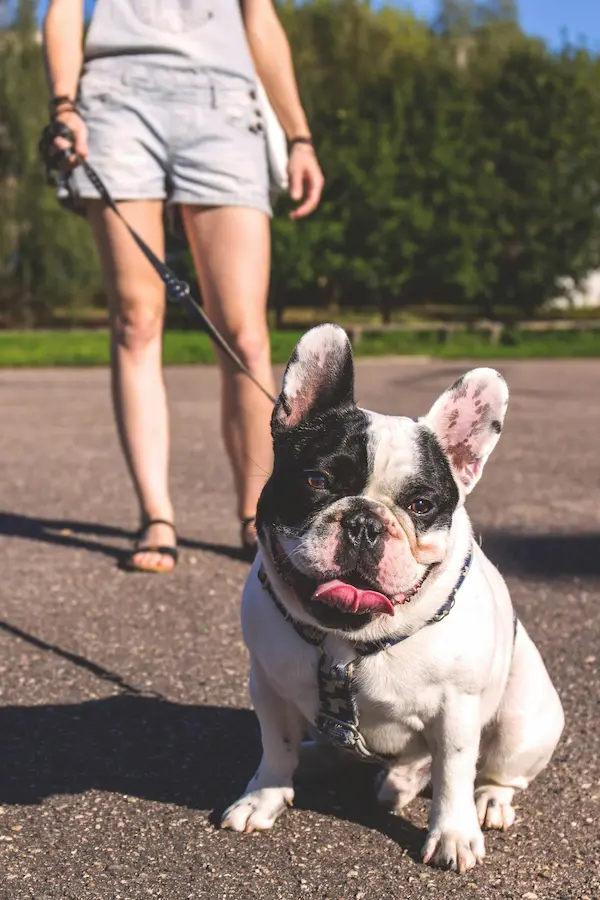
- Low-energy or flat-faced adults (French bulldog, pug, shih tzu): a 30–45 minute full walk at an easy pace, avoiding the heat of the day.
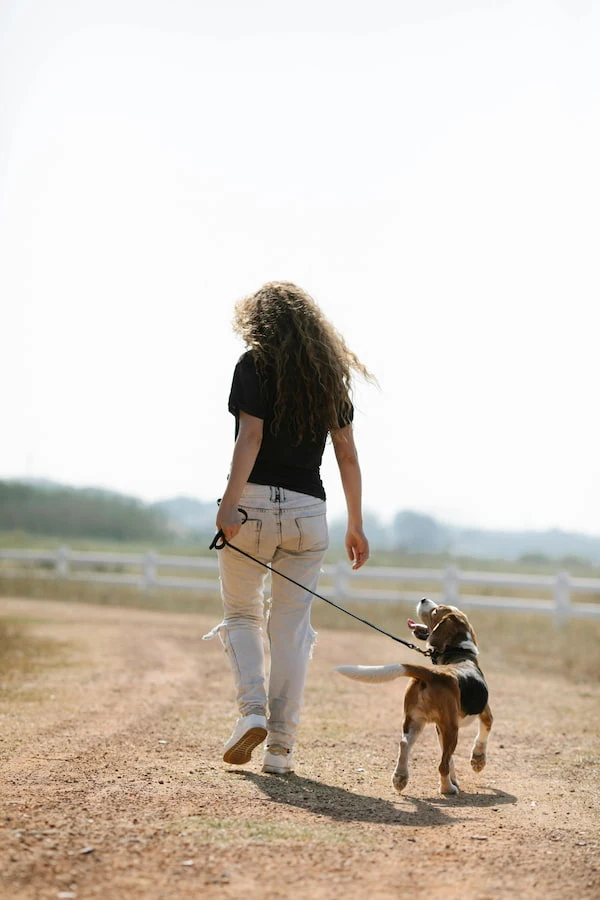
- Medium-energy adults (most mixed breeds, beagles, poodles): 45–60 minutes of full walking, plus potty breaks.
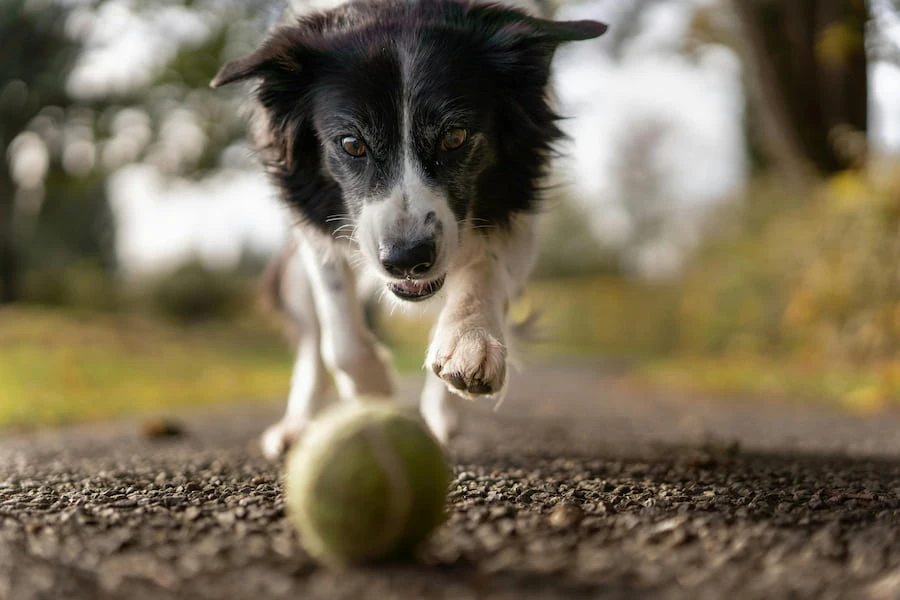
- High-energy adults (border collie, Belgian Malinois, husky, pointers and other sporting dogs): 60–90 minutes or more, often split into two longer outings, along with mental work.
- Seniors: a similar or slightly lower total, broken into shorter, gentler walks on soft ground.
To figure out how many outings your dog needs in total by age, see our guide on how often you should walk your dog.
How to combine short and full walks in one day
The formula that works for most adult dogs is one full walk a day plus 2–3 short outings, with no more than about 6 hours between trips outside during the day. Here are three realistic setups:
- If you work outside the home for 8 hours: short walk when you get up (10–15 minutes), a midday walk with a dog walker or trusted neighbor (15–20 minutes), a full walk when you get home (45–60 minutes), and a last short trip before bed.
- If you work from home: full walk first thing, before you log on; short outing at lunch; another short one in the afternoon with a bit of play; and a final bedtime trip.
- Weekends: keep roughly the same schedule as weekdays and use the extra time to lengthen the full walk or change scenery (a trail, a dog-friendly beach, a new neighborhood), without suddenly doubling your usual distance.
In summer, schedule the full walk early in the morning or late in the evening and keep midday outings short and shady. In winter you can flip that and use the warmest part of the day.
Signs your dog needs more full walks
If your dog goes out several times a day but almost every trip is short, watch for these clues:
- They get wound up in the evening, run laps around the house, or can’t seem to settle.
- They chew things, dig at the couch, or bark out of boredom.
- They pull hard on the leash for the first few minutes of every outing.
- They’ve gained weight even though they eat the same amount.
- They demand attention constantly: nudging, whining, or bringing toys over and over.
None of these signs alone proves your dog needs more walking, but if several show up together, adding one full walk a day is the first change worth trying. We explain the connection in depth in our article on how walks affect dog behavior.
Common walk-planning mistakes
- Assuming three short walks equal one long one. They add up in minutes but rarely include exploring or relaxed sniffing.
- Making up for the week with one huge Saturday hike. An out-of-shape dog who jumps from 15 minutes a day to a three-hour hike can end up sore, with torn paw pads or an injury. Build up gradually.
- Turning the full walk into a nonstop march. Without sniffing, your dog comes home with tired legs but an unsatisfied brain.
- Walking a puppy like an adult dog. Go out often and briefly, with plenty of exploring and long naps.
- Always taking the same route. Changing it, even just walking it backward, adds novelty without adding time.
Frequently asked questions
Is one long walk better than several short ones?
The best plan combines both, because they meet different needs. If your dog gets only one long walk, they have to hold their bladder for too many hours; if they get only short trips, they never get to explore. When time is tight, two medium walks of 25–30 minutes with plenty of sniffing usually work better than four rushed five-minute potty runs.
What’s the minimum length for a full walk?
For a healthy adult dog, about 30 minutes is a useful minimum, as long as a good part of it is free sniffing rather than brisk walking. Working breeds and young, high-energy dogs often need 60 minutes or more. A good clue: if your dog settles down and rests calmly for hours after the walk, the length is probably right for them.
Does running or biking with my dog count as a full walk?
It counts as physical exercise, but it doesn’t replace exploring time: on a run your dog can barely sniff or choose where to go. If you exercise together, add some sniff time before or after and match the effort to your dog’s age and breed. Puppies and flat-faced breeds shouldn’t do long or intense runs.
What if I can only manage short walks on weekdays?
Turn at least one of them into a “sniffari”: find the quietest spot nearby, use a long line, and let your dog set the pace. Add food-search games at home and, if you’re gone for long hours, consider a dog walker or doggy daycare a couple of days a week. Save weekends for longer outings and new places.
Do small dogs need a full walk too?
Yes. Size doesn’t shrink a dog’s need to explore and socialize, and many small dogs, like terriers or toy poodles, have as much energy as a medium-sized dog. They may cover less ground, but they need the same time to sniff and discover new places. Carrying them everywhere or sticking to the sidewalk in front of your building tends to breed boredom and insecurity.
Sources
- American Kennel Club (AKC): guidance on exercise and walking needs by breed and age.
- RSPCA: exercise and enrichment guidance for dogs.
- PDSA: advice on how much exercise a dog needs.
- The Kennel Club (UK): exercise needs by breed group.