
How to bond with your dog: activities that build real trust
How to bond with your dog: daily activities that build trust, how to read your dog’s signals, and what to do if your rescue dog seems distant.
Quick answer
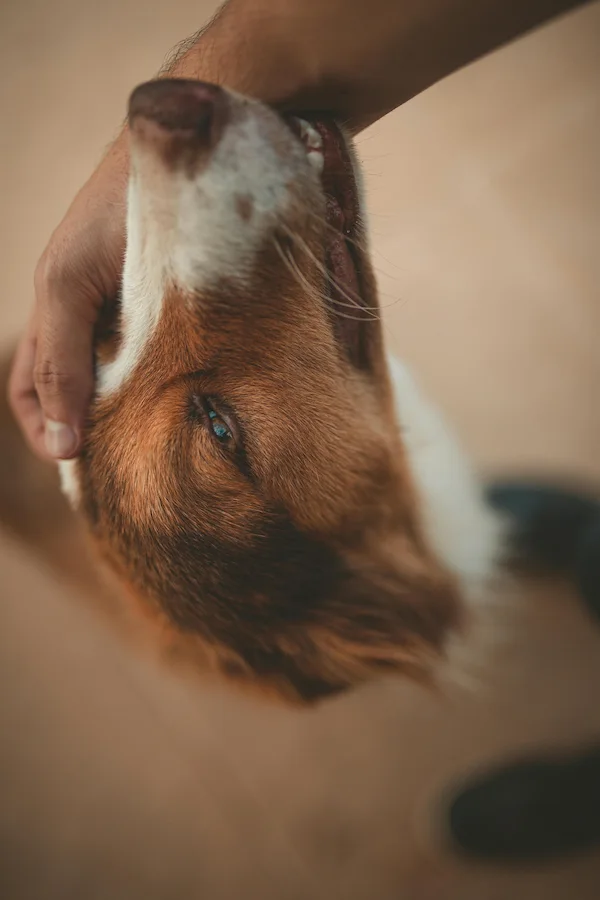
To bond with your dog, set aside 15–20 minutes of one-on-one time every day: play, sniff walks at their pace, and short reward-based training sessions. Be predictable, respect their signs of discomfort, and let your dog choose when to seek contact. With rescue dogs, trust usually takes anywhere from a few weeks to several months.
In this article
- What the bond with your dog is (and what it isn’t)
- Signs your dog trusts you (and signs you have work to do)
- Daily activities to strengthen your bond
- Body language: listen to your dog and they’ll trust you
- Consistency: clear rules and predictable reactions
- Rescue dogs: building a bond from scratch
- Mistakes that damage your bond
- Frequently asked questions
Your dog loves you, but at the park it’s like you don’t exist. Or you just adopted a dog who still backs away when you reach out. Either way, the question is the same: how to bond with your dog so they trust you, seek you out, and genuinely enjoy your company.
A strong bond doesn’t come from how many hours you spend together or how many commands your dog knows. It comes from the quality of that time: how predictable you are, how well you understand what your dog is telling you, and how many good experiences you share. Below you’ll find concrete activities, how to use body language to earn trust, what to do with a rescue dog, and the mistakes that do the most damage.
What the bond with your dog is (and what it isn’t)
Dogs form a real attachment to their people. In the late 1990s, researchers at Eötvös Loránd University in Budapest adapted a test from child psychology for dogs and found that dogs behave toward their owners much like toddlers do toward their parents: they seek them out when something worries them and explore more confidently when they’re close by. Then in 2015, a study published in Science found that when dogs and owners gaze at each other in a relaxed way, oxytocin, a hormone tied to attachment, rises in both.
A strong bond is not:
- Blind obedience. A dog can obey out of fear and not trust you at all.
- Dependence. A dog who can’t stand losing sight of you has a problem, not extra love. If your dog follows you into the bathroom and panics when you leave, read why your dog follows you everywhere.
- Being the “pack leader.” The idea of a dominant dog who must be put in their place came from observations of captive wolves. Wolf researcher L. David Mech, who helped popularize the term “alpha,” has since explained that wild packs are families, not hierarchies kept by force. Your dog doesn’t need a boss; they need someone predictable they can trust.
Signs your dog trusts you (and signs you have work to do)
No single sign tells the whole story, but together they give you a good snapshot of your relationship.
| Sign of a strong bond | Sign trust is missing |
|---|---|
| Checks in with you during walks | Ignores you completely outside the house |
| Comes to you when something scares them | Hides or moves away from you when scared |
| Sleeps relaxed near you | Tenses up or gets up when you come close |
| Calmly lets you handle paws and ears | Pulls away, freezes, or growls when touched |
| Can settle alone for a while | Can’t stand losing sight of you |
| Comes when called in familiar places | Only comes if they see food in your hand |
If you recognize your dog in the right-hand column, that’s not a failure. It’s your starting point.
Daily activities to strengthen your bond
Set aside 15–20 minutes a day of one-on-one time, phone down. Two or three short blocks work better than one long one.
Walks at your dog’s pace
At least one walk a day where their nose is in charge: long leash, quiet route, no rush. Going along while they explore, stopping when they stop, and rewarding every time they check in with you on their own turns the walk into something you share instead of a chore.
Play with clear rules
Fetch, hide-and-seek around the house, or tug build connection when you both enjoy them. Keep the rules simple: the game starts when you invite it, pauses if teeth touch skin, and ends with “All done” and a treat. Sessions of 5–10 minutes are plenty.
Positive reinforcement training as a conversation
Two or three 5-minute sessions a day teaching something new create a shared language. Your dog learns that paying attention to you pays off, and you learn to read them. To start on the right foot, review the basics of positive reinforcement dog training.
Quiet moments of contact
A slow massage, a brushing session with treats or, for shy dogs, hand-feeding part of their meal. These no-pressure moments link your presence with calm and comfort.
New challenges as a team
Solving a food puzzle together, learning a trick, or trying a low-impact dog sport like scent work or mantrailing does a lot for your relationship. You’ll find ideas in our guide to mental stimulation for dogs.
Body language: listen to your dog and they’ll trust you
Respecting what your dog tells you is probably the biggest trust builder there is. To learn how to read ears, tail, and posture in detail, see our guide to dog body language; here we focus on putting it to work in your relationship.
- Try the consent test. Pet your dog for 3 seconds, then stop. If they lean in, nudge you with their nose, or shift so you’ll keep going, carry on. If they stay still, shake off, or move away, they’ve had enough.
- Pet where they like it. Most dogs prefer scratches on the chest, the side of the neck, and behind the ears over pats on top of the head.
- Approach from the side, at their level. Crouching sideways and letting them come to you is far less intimidating than leaning over them face-on.
- Respect the “no.” Turning the head away, lip licking, freezing, or walking off are polite ways of asking for space. If you stop right then, your dog learns they can trust you and won’t need to escalate to a growl.
Consistency: clear rules and predictable reactions
Dogs trust what they can predict. To help your dog know what to expect:
- Get everyone on the same page. The same words for the same cues and the same rules for everyone: if the couch is off-limits, it’s off-limits for the whole family. A list on the fridge helps.
- React the same way every time. If jumping up sometimes gets petting and sometimes gets yelled at, your dog can’t make sense of it and becomes insecure.
- Reward what you want instead of punishing what you don’t. Veterinary behavior organizations like AVSAB advise against aversive methods because they’re linked to more fear, stress, and aggression, and they erode the relationship.
- Keep your “promises.” If something good almost always happens when you call your dog, they’ll come running. If you only call them for baths or to leave the park, they’ll stop coming.
Rescue dogs: building a bond from scratch
A newly adopted dog arrives with no idea who you are or what to expect. In the first days, they mostly need calm and routine; if your dog is also fearful, follow our guide on how to help a fearful dog for that early stage. Then, to build the bond:
- Be the source of good things, no strings attached. Drop a treat as you walk past, without looking at them or asking for anything.
- Share space without pressure. Sit on the floor of their room and read or scroll your phone. Let them get used to you without having to interact.
- Hand-feed part of their meals, as long as they come to you on their own.
- Teach simple communication games, like responding to their name or touching your hand with their nose. They give your dog a clear way to earn rewards with you.
- Ask the shelter or rescue about their history, fears, and favorite things. It prevents a lot of misunderstandings.
There’s no fixed timeline. Many dogs relax at home within a few weeks and show clear attachment in 2–3 months, while dogs with rough pasts can take quite a bit longer. Age isn’t a barrier: an adult dog can bond just as deeply as one raised from puppyhood.
Mistakes that damage your bond
- Physical punishment, yelling, and leash jerks. They teach fear, not trust.
- Forcing contact: hugging, picking up, or kissing their face when they pull away.
- Punishing growls. A growl is a warning; take it away and the next step may be a bite with no warning.
- Only paying attention when they mess up. If you only talk to your dog to scold them, they’ll learn to avoid you.
- Long hours alone with no quality time. A quick potty walk before and after work isn’t enough to build a relationship.
- Encouraging dependence. Answering every demand and never leaving them alone breeds insecurity, not connection.
Frequently asked questions
Why does my dog prefer someone else in the family?
Dogs tend to attach most to the person they link with the most good, predictable things: whoever feeds, walks, or plays with them most often. Style matters too: many dogs feel more comfortable with calm people who move slowly and speak softly. If you want to get closer, take over one meal and one walk a day and add a few short play sessions.
Can an adult rescue dog love you as much as one raised from a puppy?
Yes. Dogs keep the ability to form new attachments throughout their lives, and many dogs adopted as adults become deeply devoted to their families. What changes is the pace: a dog with bad experiences may need months of patience before feeling safe. Consistency, respect for their space, and repeated positive experiences are what make the difference.
Does sleeping with my dog improve our bond?
It can add to the feeling of closeness, but it isn’t necessary for a strong bond, and in some dogs it feeds dependence or squabbles over space. If it works for both of you and there are no health, allergy, or behavior issues, it’s a personal choice. We cover the pros and cons in should your dog sleep in your bed.
Is tug-of-war bad for my dog?
No. The idea that tug makes dogs dominant or aggressive is a myth. Played well, it’s a very cooperative game: it starts when you invite it, pauses if teeth touch your hand, and ends when your dog lets go in exchange for a treat. Letting your dog win often causes no problems and usually makes them even keener to play with you.
If my dog doesn’t like hugs, does that mean they don’t love me?
No. Hugging is a human way of showing affection; dogs show it in other ways: leaning on you, calmly following you from room to room, greeting you with a loose, wiggly body, or choosing to sleep nearby. Respecting that your dog doesn’t like hugs actually builds trust. Offer contact on their terms and let them decide how much.
Sources
- American Veterinary Society of Animal Behavior (AVSAB): position statements on dominance theory and on aversive methods in behavior modification.
- Topál, J., Miklósi, Á., Csányi, V., and Dóka, A. (1998). Attachment behavior in dogs (Canis familiaris): a new application of Ainsworth’s Strange Situation Test. Journal of Comparative Psychology.
- Nagasawa, M. et al. (2015). Oxytocin-gaze positive loop and the coevolution of human-dog bonds. Science.
- Ziv, G. (2017). The effects of using aversive training methods in dogs — A review. Journal of Veterinary Behavior.
- RSPCA: reward-based training and building a good relationship with your dog.